
Tenney Mountain Resort Gutter & Heat Cable Installation
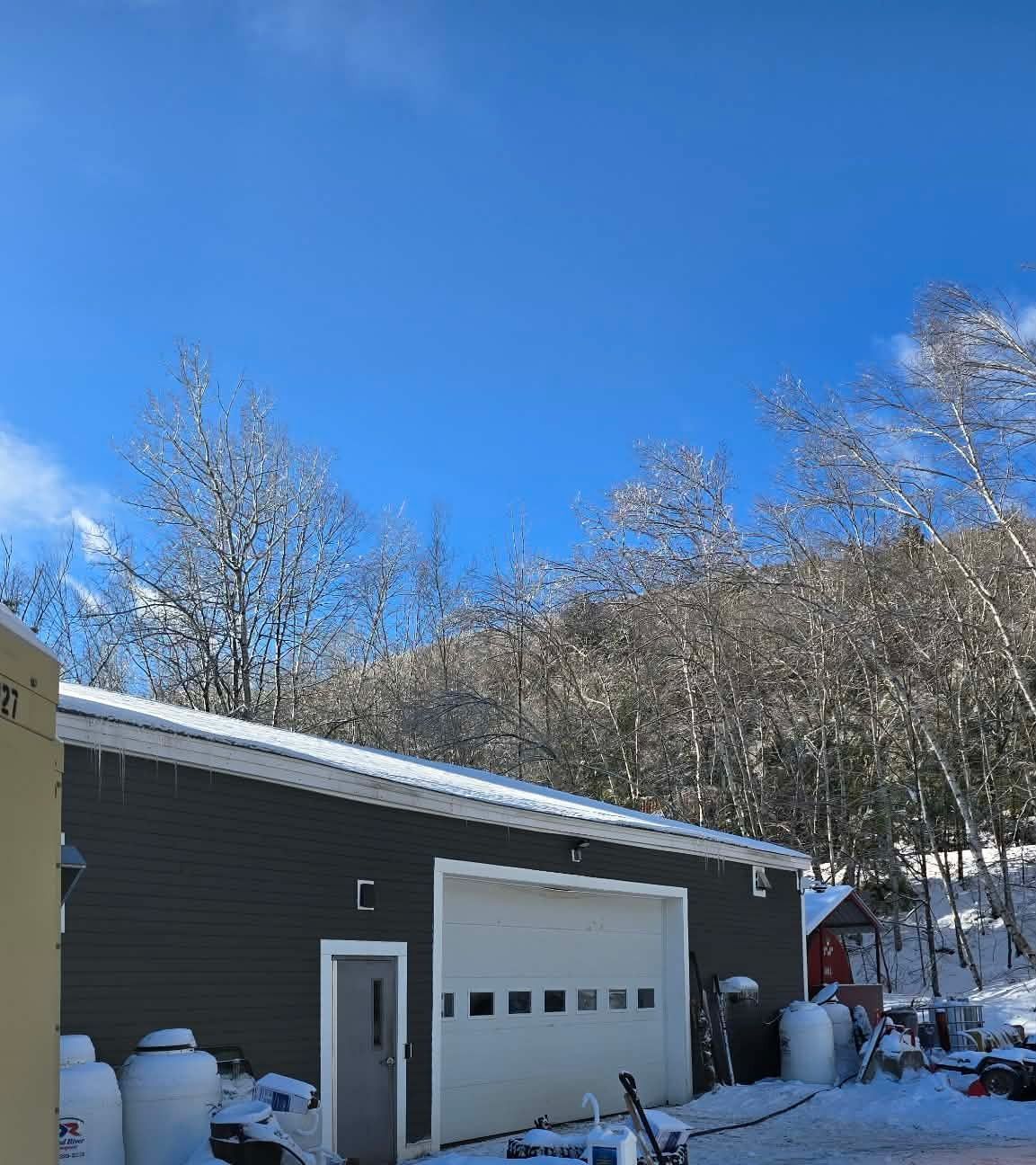
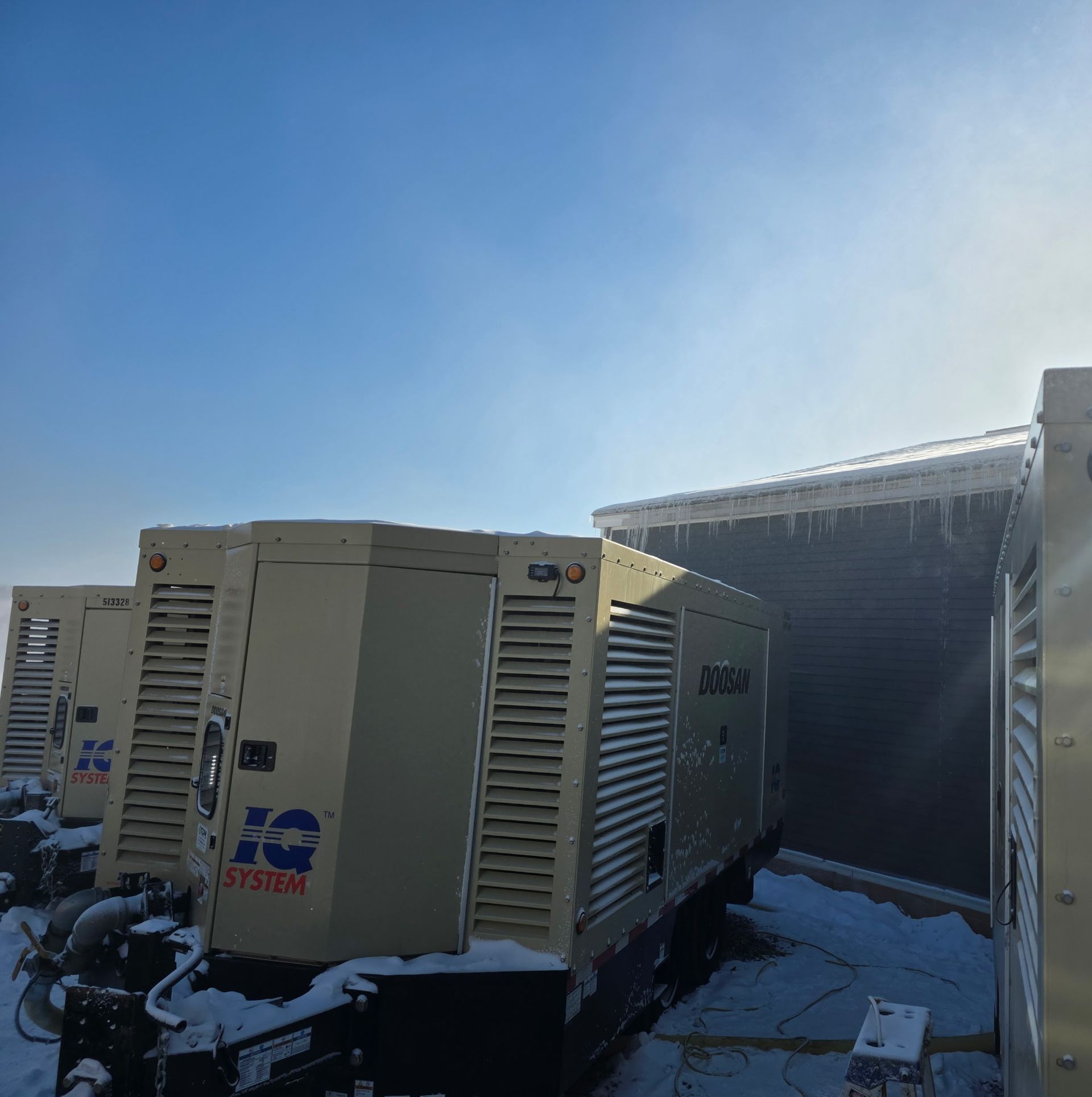
Employees at Tenney Mountain Resort's mechanics shop were having to chop through ice just to get into the building. Meltwater was freezing around the entrances during winter, creating a recurring access and safety problem. New England Gutter Systems installed a heated 6-inch seamless gutter system with 3×4 downspouts to give that meltwater a better path off the roof and away from the building.
Project Details
The Problem
The mechanics shop was experiencing heavy ice buildup during the winter. Meltwater coming off the roof was reaching the drainage system and ground, then freezing in the cold conditions.
The worst buildup was around the entry doors. Ice accumulated to the point that staff had to manually break it up to maintain access to the building.
On a commercial property, that creates more than an inconvenience. Employees need safe access to the building, and winter drainage needs to keep working when temperatures are below freezing.
The solution had to address the water itself: give the meltwater a reliable path through the gutter system and keep that path open during freezing conditions.
What We Installed
We installed a winter-ready drainage system designed to keep roof runoff moving during freezing temperatures.
- 6-inch K-style seamless gutters to provide additional capacity for snowmelt and roof runoff
- Heat cable installed in the gutter system to help maintain an open drainage path during freezing temperatures
- 3×4 oversized downspouts to move water away from the gutters and building efficiently
The important part is how these components work together. The heat cable provides a heated path through the gutter so meltwater is less likely to freeze before it reaches the downspout. The larger gutter and downspout system then gives that water somewhere to go.
The goal is not simply to melt ice. It is to keep meltwater moving.
Before
- Ice forming along the roofline and drainage areas
- Heavy ice buildup around the mechanics shop entrances
- Employees manually chopping ice to maintain access
- Winter meltwater freezing where it could not drain effectively
After
- 6-inch seamless gutter system installed
- Heat cable added to the gutter drainage path
- 3×4 downspouts installed for increased drainage capacity
- A dedicated drainage path for winter meltwater
- Reduced ice buildup around the building entrances
Why Heat Cable Made Sense Here
Heat cable is not a substitute for a properly sized gutter system. It works by helping keep an otherwise adequate drainage path open when temperatures are low enough for meltwater to freeze.
That made sense for this building. The problem was not simply that snow was melting. The problem was that meltwater was freezing before it could get away from the building.
By heating the gutter drainage path and providing adequate gutter and downspout capacity, the system gives that water a better chance to remain liquid long enough to leave the building.
For properties exposed to heavy snow and repeated freeze-thaw cycles, that distinction matters.
Why We Used 3×4 Downspouts
A heated gutter is only useful if the water has somewhere to go. We used 3×4 downspouts to give the meltwater a larger, more direct path out of the gutter system.
Winter runoff can come quickly when snow begins melting, followed by freezing temperatures shortly afterward. Larger downspouts help the system move that water through the drainage path rather than creating another bottleneck.
This is the same reason we often recommend looking beyond the gutter itself when evaluating a drainage problem. A gutter can have plenty of capacity, but if the downspout cannot move the water, the system can still back up.
New Hampshire Winter Drainage Is Different
New Hampshire winter drainage is not just about rainfall. A gutter system can handle summer storms perfectly well and still struggle when snow begins melting off a roof in February.
Snow can remain on a roof for extended periods. When temperatures rise, a large amount of water can enter the gutter system in a relatively short time. When temperatures drop again, that water can freeze quickly.
That is why we look at gutter capacity, downspout size, drainage, and winter conditions together rather than treating the gutter as an isolated component.
At Tenney Mountain, the mechanics shop needed a system that could keep doing its job during the same weather conditions that were causing the problem in the first place.
Working on a Mountain Property
This was a winter installation at an active ski resort, so our crew was working in the same type of cold conditions that had created the drainage problem.
Working on a commercial property also means thinking about more than the roofline. Employees need access to the building, equipment needs to move in and out, and drainage problems cannot simply be put off until spring.
The finished system was designed around those real operating conditions rather than just the appearance of the gutters.
A Commercial Drainage Project Built Around the Problem
This project was not about simply replacing gutters. The winter conditions were telling us what the drainage system needed to accomplish: move meltwater away from the building before it could become an access and safety problem.
The finished system combines 6-inch seamless gutters, heat cable, and 3×4 downspouts to address that problem directly.
If your commercial property is dealing with winter drainage, ice buildup, or a gutter system that cannot keep up with snowmelt, start by looking at the entire drainage path — from the roof to the ground.
New England Gutter Systems installs and maintains gutter systems designed around New Hampshire's weather, buildings, and drainage conditions.